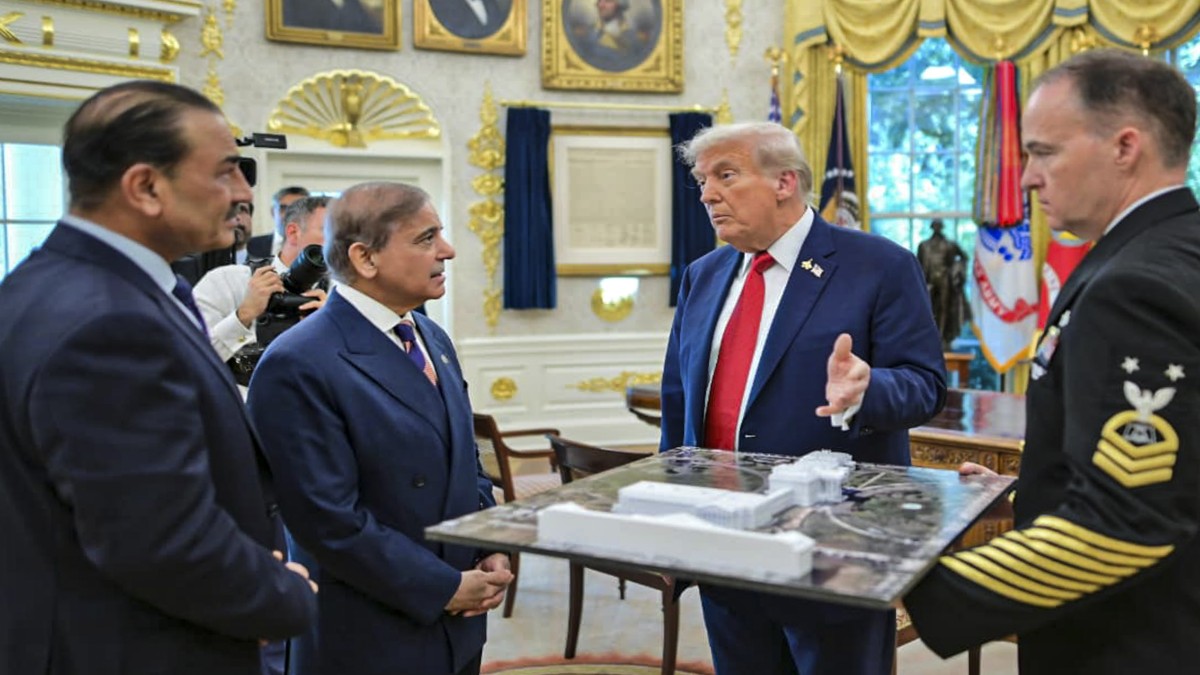
On September 30, US President Donald Trump announced that Pakistan Prime Minister Shehbaz Sharif and Chief of Army Staff Field Marshal Asim Munir fully endorse his peace plan to end the ongoing Gaza conflict. Trump highlighted their involvement alongside other global leaders in a joint press conference at the White House with Israeli Prime Minister Benjamin Netanyahu.
During the press briefing, Trump stated, “This afternoon after extensive consultation with our friends and partners throughout the region, I’m formally releasing our principles for peace, which people have really liked.” He emphasized the collaborative nature of the plan, expressing gratitude to leaders from various nations involved in its formulation.
Trump continued by thanking those he engaged with on the issue, including notable figures like Saudi Arabia’s King and Qatar’s Emir. He described their contributions as vital in shaping discussions surrounding the Gaza situation. The President stated, “These leaders were totally involved. They’ve been very much part of the negotiation process, sharing their insights on what the parties can accept.”
Reflecting on his extensive dialogues with world leaders, Trump mentioned the involvement of the Jordanian King and Turkish President Recep Tayyip Erdoğan, stating, “They were all with us during this planning phase, either in person or via phone.” He highlighted the significance of Pakistan’s backing, saying, “The prime minister and the field marshal of Pakistan were with us right from the beginning, incredible.”
Following the announcement, Trump said he received a statement from Sharif and Munir affirming their 100% support for the plan. He insisted that their involvement signals a united front among nations eager to resolve the conflict.
Trump’s comprehensive plan proposes transforming Gaza into a deradicalised zone free of terror, promising to rebuild the region while ensuring it poses no threat to its neighbors. If both parties agree, he claimed, an immediate cessation of hostilities could commence, and Israeli forces would withdraw to predetermined lines.
The proposed framework guarantees a pause in military operations, including airstrikes, while ensuring the return of all hostages within 72 hours after Israel’s acceptance of the plan. In return, Israel will release 250 prisoners sentenced to life and free 1,700 Gazans detained post-October 7, incorporating all minors and women.
The plan recognizes the delicate situation surrounding hostages, stating, “For every Israeli hostage whose remains are returned, Israel will release the remains of 15 deceased Gazans.” This terms emphasis suggests a commitment to balancing both parties’ needs while aiming for peace.
Shortly after Trump’s revelation, the foreign ministers from several countries, including Saudi Arabia, Jordan, and Pakistan, lauded Trump’s leadership in navigating the crisis through a joint statement. They welcomed the announced proposal and expressed their intent to engage positively towards a feasible agreement.
The statement reaffirmed a call for unrestricted humanitarian aid deliveries to Gaza, preventing the displacement of Palestinians, hostages’ release, full Israeli withdrawal, and reconstruction of Gaza. They stressed the importance of aligning this reconciliation with international law to ensure lasting stability in the region.
Pakistan PM Shehbaz Sharif, attending the 80th session of the UN General Assembly in New York, met Trump previously in the White House, showcasing the relationship’s development. Earlier this summer, Munir had joined Sharif for lunch at the White House, indicating continued diplomatic ties.
As the latest meeting unfolded, Sharif re-engaged with Trump on the sidelines of the UNGA, reinforcing collaborative efforts with Arab representatives. The outcome highlights a complex geopolitical challenge involving Pakistan’s position in the resolution of the Gaza conflict.