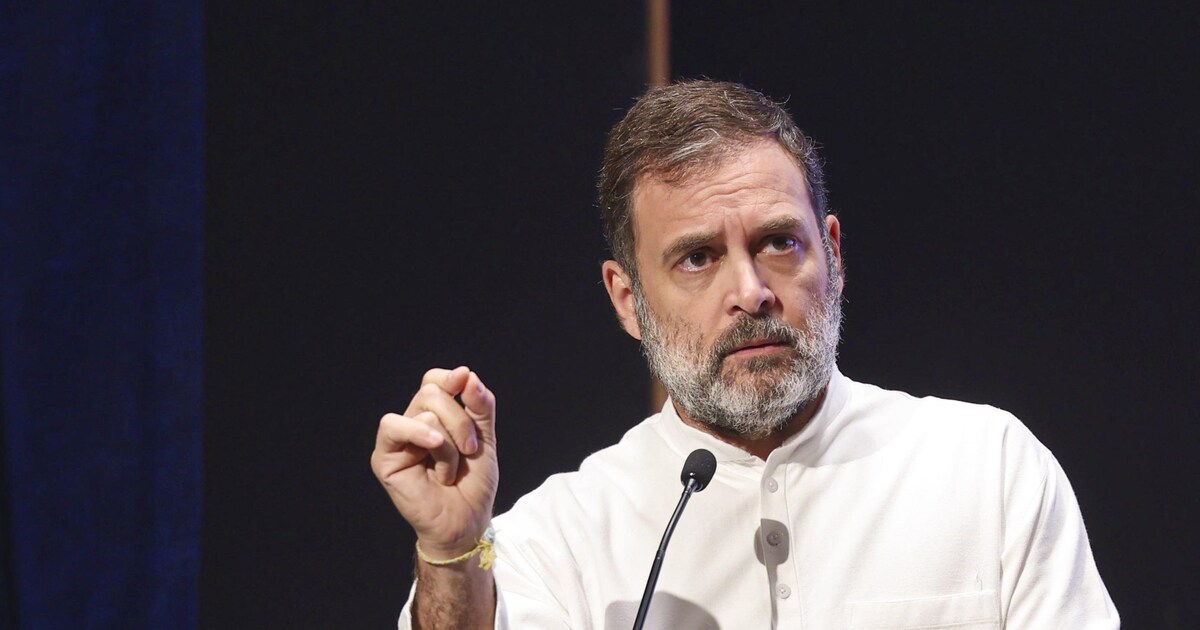
The Congress party intensified its critique of the BJP-RSS alliance on Monday, alleging a calculated conspiracy to silence its leader Rahul Gandhi following alarming remarks from a former student leader. This accusation emerged after Printu Mahadev, a former president of the Akhil Bharatiya Vidyarthi Parishad (ABVP), made a shocking threat against Gandhi, prompting the Congress to demand accountability and action.
During a press conference, Congress spokesperson Pawan Khera called the nature of Mahadev’s comments “chilling and heinous.” He highlighted the grave implications of a statement made during a televised debate, where the former ABVP leader purportedly suggested that “Rahul Gandhi will be shot in the chest.” Khera questioned the lack of immediate action against such threats, saying, “No action has been taken against this serious issue. Why does it take a major outcry for the authorities to react?”
This situation arises in a politically charged climate, where allegations of ideological defeat and threats of violence intertwine. Khera asserted that those responsible for hatching this “conspiracy” are individuals from the opposing party, struggling to maintain their ideological footing. “They are resorting to violence because they cannot win an ideological battle. It is evident that people are resonating with the concerns raised by Rahul Gandhi from Kashmir to Kanyakumari,” he stated.
Mahadev’s remarks not only raise concerns about Gandhi’s safety but also reflect a worrying trend within political discourse in India. Khera underscored the responsibility of the ruling party’s leaders, stating, “You cannot silence the voice of millions of marginalized individuals seeking justice and representation through intimidation and threats.” He called for a united stand against such hostility.
In a related statement, Congress General Secretary K.C. Venugopal wrote to Union Home Minister Amit Shah, demanding swift action against Mahadev. He pointed out that the failure to address this threat would imply complicity in normalizing violence against opposition leaders. Venugopal emphasized that Mahadev’s declaration amounted to a serious incitement of violence, undermining both the Constitution and the rule of law.
Venugopal expressed concerns over the broader implications of Mahadev’s statement: “This threat is not merely an attack on an individual but represents an assault on the democratic fabric of our nation.” He urged immediate legal action through the state police, framing it as essential for ensuring safety and maintaining the integrity of India’s democratic institutions.
Continuing his rebuttal, Venugopal highlighted the pervasive environment of hostility and violence perpetuated by the ruling party. He remarked that, historically, such incendiary remarks stem from a culture of intolerance where political dissent faces threats that go beyond verbal attacks, a trend with serious repercussions for democratic dialogue.
According to Khera and Venugopal, the situation calls for collective vigilance and action against entities trying to stifle dissent through violence. They posited, “It’s crucial for the nation to identify and confront those who believe in resolving ideological differences through intimidation rather than through democratic processes. We will not allow this narrative to gain ground.”
As the Congress ramps up its campaign against such divisive politics, it beckons supporters and other political factions to rally against the undermining of constitutional rights and the safety of political figures. They advocate for a united front that rejects threats and emphasizes peaceful resolution of political differences, upholding the spirit of democracy that is central to India’s ethos.