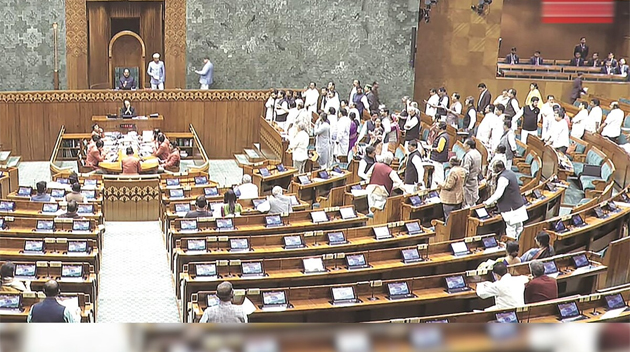
The Congress party is likely to stay away from the joint parliamentary committee (JPC) responsible for scrutinizing three contentious Bills, according to party sources on Monday. The committee will review legislation designed to remove top government officials arrested for serious charges for a consecutive duration of thirty days.
Party insiders revealed that the Congress is preparing to formally communicate its decision to Lok Sabha Speaker Om Birla soon. This move aligns with a growing trend among opposition parties, as at least three other opposition groups — the Trinamool Congress, Shiv Sena (UBT), and Aam Aadmi Party — have already pledged not to engage with the parliamentary panel. The Samajwadi Party has also indicated its support for a coalition boycott, amplifying the stance against the proposed Bills.
While some political parties remain undecided about their participation, none have expressed a willingness to join the committee, signaling potential roadblocks in the legislative process. The anticipated non-participation raises concerns about the future of governance and accountability regarding the proposed measures.
Earlier this month, Lok Sabha Speaker Om Birla clarified that he had yet to receive any formal communication regarding a boycott of the committee. He stated, “On the issue of JPC, no political party has communicated to me in writing on this subject.” This leaves the government to speculate about the motivations behind the opposition’s planned withdrawal.
On the last day of the Monsoon Session, Home Minister Amit Shah proposed three significant Bills in the Lok Sabha:
- The Government of Union Territories (Amendment) Bill
- The Constitution (One Hundred and Thirtieth Amendment) Bill
- The Jammu and Kashmir Reorganisation (Amendment) Bill
The Bills aim to outline the conditions for removal of ruling officials, including the Prime Minister and Chief Ministers, if they face arrest under serious charges for a span of thirty consecutive days. This legislative move has spurred intense protests from opposition parties, who label the Bills as unconstitutional and politically motivated attempts to undermine opposition leaders across states.
The House referred the Bills to the joint committee for detailed examination, which will consist of 21 members from the Lok Sabha and 10 from the Rajya Sabha. However, as it stands, the committee has not yet been established, raising questions about its efficacy in discussing these crucial laws.
As political tensions escalate, the boycott emerges as a significant statement from opposition forces, emphasizing their discontent with the government’s rising authority over legal and constitutional norms. Political analysts suggest that the ongoing situation could lead to shifts in power dynamics within the Parliament, calling into question the government’s capacity to push through controversial reforms under mounting scrutiny.