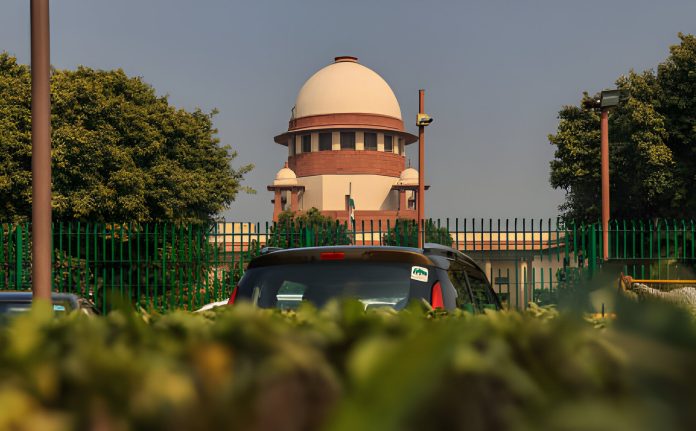
The Supreme Court of India on Wednesday referred the question of whether litigants can directly seek anticipatory bail from high courts, or if they must approach the sessions court first, to a three-judge bench. The decision came amid concerns regarding the judicial practice in various states, particularly the Kerala High Court.
A bench consisting of Justices Vikram Nath and Sandeep Mehta stated that the matter requires an in-depth examination by a larger bench once constituted. “This matter requires to be heard by a three-judge bench,” the court noted, indicating the complexity and significance of the issue.
This development follows the earlier appointment of senior advocate Siddharth Luthra as amicus curiae to assist the court in addressing this pressing legal question.
The Supreme Court had expressed serious concerns on September 8 regarding the “regular practice” of the Kerala High Court to entertain anticipatory bail applications without requiring litigants to approach the sessions court first. “One issue that is bothering us is that in the Kerala High Court, anticipatory bail applications are regularly entertained directly. Why is that so?” the affording bench inquired.
The court referred to existing legislation, including provisions in the old Code of Criminal Procedure and the new Bharatiya Nagarik Suraksha Sanhita (BNSS), 2023, which establish a clear hierarchy for bail applications. Notably, Section 482 of BNSS addresses directions for the grant of bail to individuals anticipating arrest.
“It doesn’t happen in any other state. Only in the Kerala High Court… applications for anticipatory bail are regularly entertained directly,” the bench highlighted, suggesting a possible deviation from established protocols.
The bench’s remarks originated during the hearing of a plea filed by two individuals challenging a Kerala High Court order that denied them anticipatory bail. The petitioners had approached the high court directly instead of seeking relief from the sessions court, leading to deeper scrutiny of the procedures involved.
The Supreme Court remarked on the potential consequences of allowing direct applications to high courts, stating that such practices might deprive lower courts of the necessary factual records that typically precede any bail action. “We are inclined to consider whether the option to approach the high court is a matter of choice for the accused or whether it should be mandatory to first go to the sessions court,” the bench asserted.
In a proactive move, the top court also issued a notice to the Kerala High Court. The notice, directed through the Registrar General, seeks a formal response on the matter, thereby opening a pathway for further discussion on the legal ramifications and judicial precedents regarding anticipatory bail.