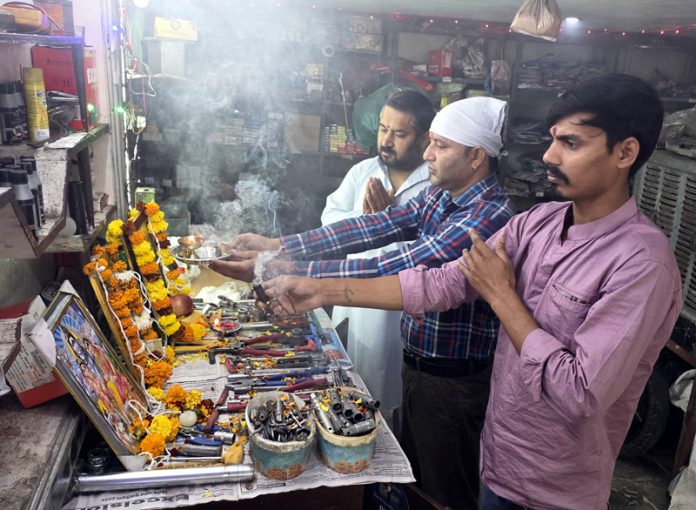
Jammu celebrated Vishwakarma Day today with fervent devotion and traditional rituals, reflecting the rich cultural heritage of the region. Workers from various sectors, especially technical workers and artisans, dedicated the day to offering prayers to Lord Vishwakarma, the divine architect. They sought blessings for safety, prosperity, and success in their professions.
The celebrations emphasized a significant tradition where workers observed a “no-work” day, dedicating their time to cleaning, servicing, and worshipping their tools and machines. This ritual stems from the belief that Lord Vishwakarma’s blessings can shield workers from accidents and foster prosperity in industries and organizations. Vishwakarma Day is always celebrated the day after Diwali, enriching the festive spirit of the season.
At the Vishwakarma Sabha Temple Complex in Bakshi Nagar, Jammu, the celebrations commenced with a Hawan and special prayers. The event, organized by the Vishwakarma Sabha, drew notable attendance from several dignitaries, including Member of Parliament Jugal Kishore Sharma, MLA Jammu West Arvind Gupta, J&K BJP President Sat Sharma (CA), and other prominent leaders.
The dignitaries paid tribute to the legacy of Lord Vishwakarma, praising his pivotal role as a “divine engineer” and an inspiration for all craftsmen and artists. They recognized the essential contributions of technical workers in nation-building and advocated for the welfare of the Vishwakarma community. “We must unite for the betterment of our community,” some leaders remarked.
The leadership of the program comprised notable figures such as Kuljeet Rai (Chairman, Vishwakarma Sabha), along with Vijay Kumar (Vice Chairman), Rattan Lal Changotra, and others who ensured a smooth celebration.
Simultaneously, at the Vishwakarma Temple in New Plots, Jammu, a separate Hawan and Bhajan Kirtan took place, led by Mohinder Lal (President of the Temple Committee).
During the ceremonies, Mohinder Lal voiced a long-standing request to declare Vishwakarma Day as a Gazetted Holiday, emphasizing that “every worker already observes an undeclared holiday on this day.” His remarks resonated with many who support the recognition of this day’s cultural and industrial significance.
Ramesh Angotra joined in supporting the demand, urging the government to formalize the holiday, thereby acknowledging the day’s importance not just for workers but for the broader social and industrial fabric of Jammu.
The celebrations concluded with a sumptuous Langer (community feast) for all devotees. This initiative illustrated the spirit of sharing and togetherness, vital to the rich cultural ethos celebrated during Vishwakarma Day. The organizing committee, which included prominent figures like Rattan Lal, Joginder Angotra, and Vishal Angotra, worked diligently to ensure a memorable experience for attendees.
In conclusion, Vishwakarma Day not only showcases the reverence for the divine architect but also highlights the importance of technical workers in the community. This day serves as a reminder of their vital role, fostering unity, and encouraging prosperity within industries, thereby reflecting the spirit of collaboration and devotion.