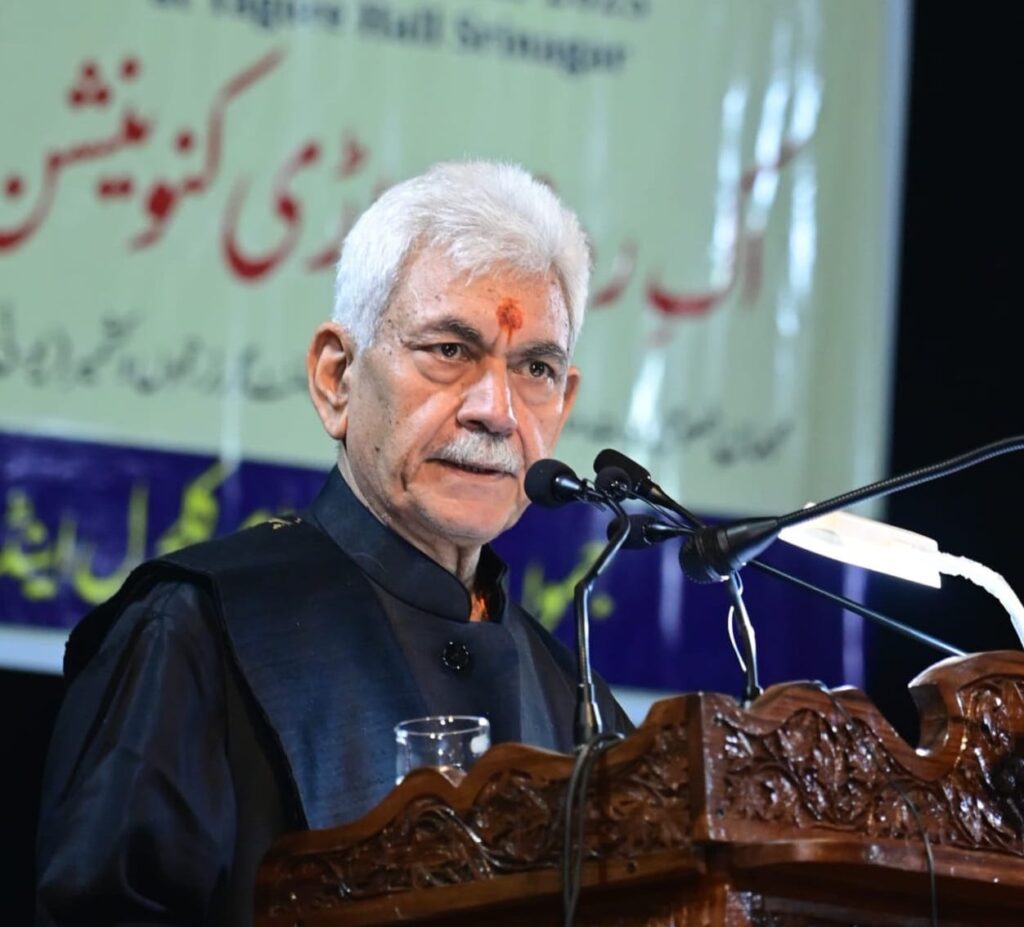
Lieutenant Governor Manoj Sinha addressed an important issue regarding terrorism in Jammu and Kashmir, stating that while government and security forces are effectively carrying out their duties, ending terrorism ultimately relies on the people of the Union Territory as well.
During a recent event, Sinha highlighted how terrorism has significantly declined across India and is now largely confined to specific regions. He noted, “Terrorism has been reduced in other parts of the country. The North-East is largely terror-free now. Left-wing extremism or Naxalism is now confined to a few districts, and I am confident it will be eradicated in the coming months.”
The Lieutenant Governor specifically pointed out areas like Karnataka, Kerala, and Jammu and Kashmir that have historically faced the brunt of terrorist activities, emphasizing that it is vital to totally eliminate this menace. “Terrorism is the biggest hurdle to development and the creation of employment opportunities,” he stressed.
Sinha commended the work of security forces and local administration while urging the public to recognize their role in the fight against terrorism. He stated, “People of Jammu and Kashmir also have a responsibility. They should not indulge in activities that could unintentionally lead to the rise in terrorism.”
The situation in Jammu and Kashmir, as painted by Sinha, demonstrates notable improvement. He declared that violent street protests and stone pelting have become rare occurrences. “Schools, colleges, and businesses are functioning as they do in other parts of the country. No significant commanders of any major terror outfit are alive now, and there has been only one local recruitment to terrorism this year,” he added.
Sinha did not shy away from addressing external influences, notably Pakistan’s ongoing support of terrorism. He described the complex history of conflict, remarking, “Unfortunately, we have a neighbor who is always up to some mischief. Rather than focusing on nation-building after the partition, Pakistan chose to attack India and Jammu and Kashmir directly.”
The LG highlighted how Pakistan’s strategy has shifted from direct military confrontation to proxy wars through the radicalization of youth, stating, “They have lost four direct wars and understand they cannot win against us in conventional warfare.”
Reflecting on the human cost of terrorism, Sinha poignantly noted that over 40,000 lives have been lost to this violence. He posed a challenging question: “How long will this continue? While it is the responsibility of the government and armed forces to combat terrorism, the onus is also on the people. They must come forward to help eradicate this menace.”
Without directly naming individuals, Sinha cautioned about the dangers of narratives that mirror those propagated by terror groups like ‘The Resistance Front (TRF).’ He argued that when public figures echo sentiments reflected on TRF’s social media platforms, it poses a serious threat to national security. “Statements that align too closely with those made by terrorist organizations can cause significant harmful impacts,” he warned.
Sinha’s discourse shines a critical light on the collective responsibility needed to foster peace and security in Jammu and Kashmir. As the region moves towards a more stable future, his call for communal cooperation remains vital in overcoming challenges posed by terrorism.