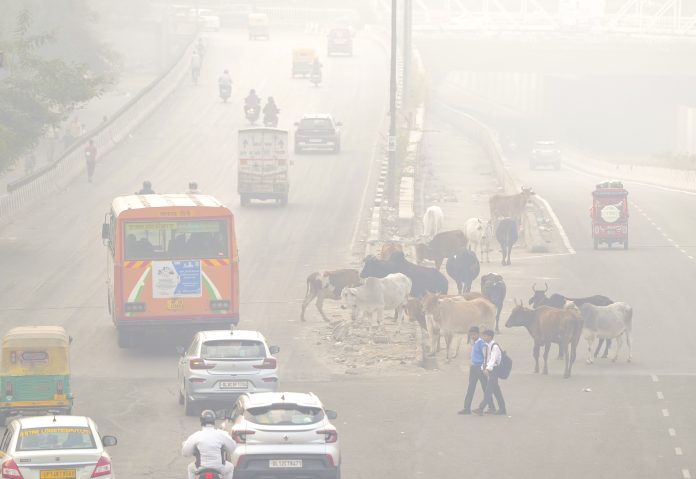
Delhi remains engulfed in smog as the national capital recorded an Air Quality Index (AQI) of 360 on Saturday morning, reflecting a ‘very poor’ air quality status. According to data released by the Central Pollution Control Board (CPCB), there is no respite from the hazardous pollutants that plague the city.
The CPCB categorizes the AQI as follows: 0–50 indicates good air quality, 51–100 signifies satisfactory, 101–200 is moderate, 201–300 is poor, while both ‘very poor’ and ‘severe’ ratings apply to scores of 301-400 and 401-500, respectively. With the AQI at an alarming 360, Delhi’s residents face serious health risks.
In addition to the hazardous air quality, the India Meteorological Department (IMD) reported a minimum temperature of 11.8°C this morning, highlighting the chilly conditions that accompany pollution in the winter months. As the IMD forecasts fog throughout the day, visibility and air quality are expected to deteriorate further.
The maximum temperature is predicted to rise to around 28.2°C, presenting a stark contrast to the morning chill. Humidity levels stood at a remarkable 100 percent at 8:30 a.m., leading to dense moisture that exacerbates air pollution. Such high humidity often traps pollutants closer to the ground, worsening the toxic environment.
Experts emphasize the urgent need for individuals, particularly those with existing respiratory problems, to limit outdoor activities. The consistently poor air quality can lead to increased hospital admissions and respiratory diseases in Delhi’s population.
Authorities continue to grapple with this public health crisis. Numerous initiatives, including the Graded Response Action Plan (GRAP), aim to mitigate pollution levels. However, immediate measures are essential, especially during the winter months, when pollution levels typically escalate.
Residents share their frustrations as many have experienced coughing, throat irritation, and other respiratory issues due to prolonged exposure to this toxic air. The collective plea for awareness and action from the government has grown louder amid this environmental emergency.
As Delhi struggles to breathe, this situation reinforces the need for sustainable urban planning and pollution control strategies. Only through comprehensive, coordinated action can the capital hope to restore clean air and protect its citizens’ health in the long term.