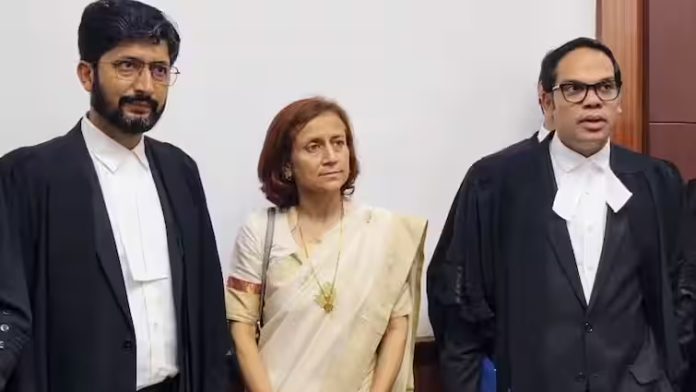
Geetanjali Angmo, wife of prominent climate activist Sonam Wangchuk, visited him in Jodhpur Central Jail on Wednesday. Wangchuk remains imprisoned following the Leh violence on September 24, which sparked widespread protests and calls for justice.
During her recent visit, Angmo was accompanied by lawyer Ritam Khare. In her post on X, she revealed that Wangchuk’s legal team has now acquired a copy of his detention order, which will be formally contested in court.
The documents explain the allegations against Wangchuk and clarify why the authorities invoked the National Security Act (NSA) in his case. This act allows the government to detain individuals without trial under specific circumstances.
Earlier, on Saturday, Wangchuk’s brother Tsetan Dorje visited him, also with lawyer Mustafa Haji. Post-visit, Haji reported on X that Wangchuk insists on an independent judicial inquiry into the tragic events where four protesters lost their lives.
“Wangchuk is prepared to stay in jail until a proper inquiry is conducted,” Haji stated, underscoring his brother’s commitment to justice and the rights of the people.
Amid ongoing legal battles, Angmo has petitioned the Supreme Court for her husband’s immediate release. The court is set to hear this vital plea on October 14, offering hope for a resolution to the distressing saga.
Wangchuk has long been a stalwart advocate for environmental protections and social justice in Ladakh. His recent detention aligns with tensions surrounding protests that demand statehood for Ladakh and its inclusion under the Sixth Schedule of the Constitution, which grants autonomy to certain regions in India.
Authorities initially took Wangchuk to Delhi post-arrest before transferring him to Jodhpur Central Jail on September 26. His case has sparked robust debate regarding the balance of maintaining public order and protecting individual rights.
As the legal proceedings unfold, Wangchuk’s supporters await the upcoming Supreme Court hearing with bated breath, hoping for a favorable decision that could lead to his release. His sustained activism underscores a critical moment in Ladakh’s political landscape, where calls for recognition and rights are intensifying.