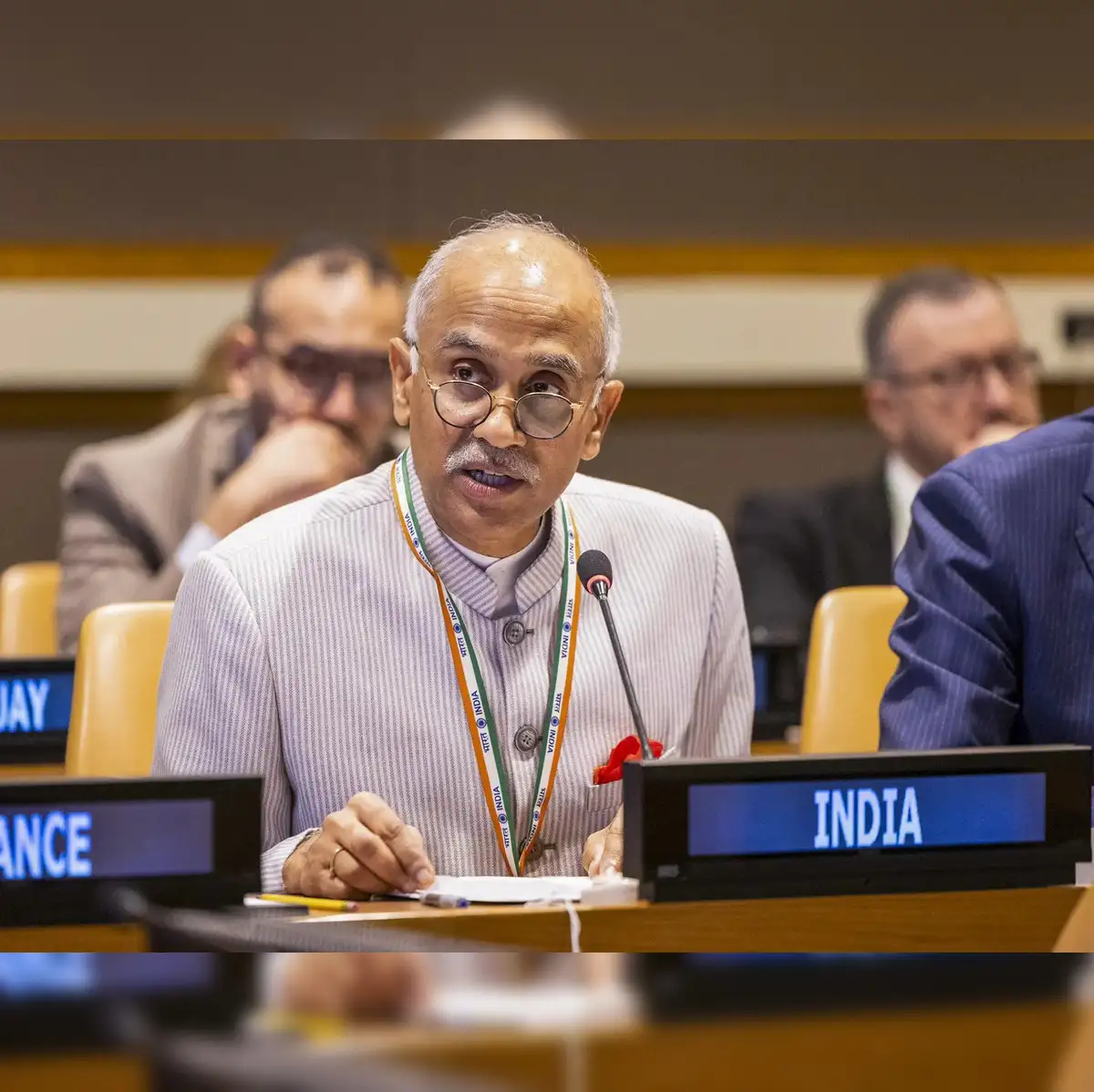
On Wednesday, India urged the international community to take decisive action against terror groups like Lashkar-e-Tayyiba (LeT) and Jaish-e-Mohammed (JeM), ensuring they cannot exploit Afghan territory for terrorist activities. India’s Permanent Representative to the UN, Ambassador Parvathaneni Harish, made the request during a UN Security Council meeting on Afghanistan.
International Community’s Role in Tackling Terrorism
In his address, Harish emphasized the importance of a cohesive global response. “The international community must coordinate efforts towards ensuring that entities and individuals designated by the UN Security Council, including ISIL, Al-Qaeda, and their affiliates, can no longer exploit Afghan territory,” he stated.
This statement directly pointed to Pakistan as a facilitator for these terrorist groups. India believes that ensuring peace in Afghanistan is essential for broader regional stability.
India’s Commitment to Afghanistan
The relationship between India and Afghanistan has profound historical ties. Harish noted that India has a “paramount interest” in fostering peace and stability in Afghanistan, which has suffered from ongoing conflict.
India is dedicated to engaging in international discussions concerning Afghanistan’s future, participating in UN meetings in Doha and other regional forums. Harish reiterated India’s support for Afghanistan by citing regular communications with Afghan leaders, including External Affairs Minister S. Jaishankar’s discussions with the Acting Foreign Minister, Amir Khan Muttaqi.
Need for a Fresh Approach Towards Post-Conflict Afghanistan
Harish elaborated on the necessity for a new strategy in addressing Afghanistan’s post-conflict situation. “Focusing only on punitive measures is unlikely to meet desired results,” he stated, advocating for policies that encourage positive actions while disincentivizing harmful ones.
India believes the “business as usual” approach will fail to address the current challenges and will not meet the expectations of the Afghan people. Over four years under a sanctioned regime have not led to the anticipated development assistance that Afghanistan desperately needs.
Humanitarian Assistance from India
Following last month’s devastating earthquake in Afghanistan, India quickly stepped in to provide humanitarian aid. The country delivered 1,000 family tents and 15 tonnes of food supplies to those affected.
Further shipments included 21 tonnes of relief materials such as essential medicines, blankets, and hygiene kits. Harish confirmed that more supplies are on the way, highlighting India’s commitment to supporting the Afghan populace.
Since the Taliban took control of Kabul, India has contributed significantly to Afghan humanitarian needs, supplying around 50,000 tonnes of wheat and over 330 tonnes of medicines and vaccines. This assistance reflects India’s unwavering commitment to meet the developmental needs of the Afghan people, which Harish described as ‘non-negotiable’.
Long-Term Development Initiatives
India’s strategy in Afghanistan encompasses more than immediate aid; it includes long-term development partnerships. Harish noted India’s involvement in over 500 development projects across Afghanistan’s provinces.
These projects aim to enhance the country’s stability and prosperity, including partnerships with the UN Office on Drugs and Crime that focus on drug rehabilitation, especially for women.
India’s goal is not just to alleviate immediate suffering but to build resilience in the Afghan community.
As Harish closed his address, he reaffirmed India’s stance on engaging with all relevant stakeholders to support the international community in its efforts to establish a stable, peaceful, and prosperous future for Afghanistan.