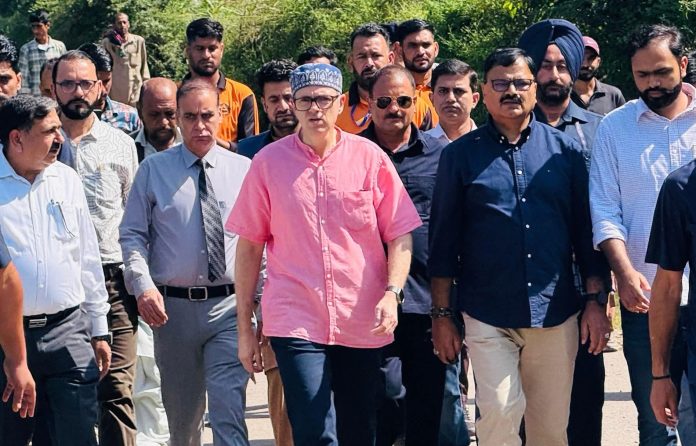
Jammu and Kashmir Chief Minister Omar Abdullah visited the flood-affected Kalaban border area in Poonch district, where land subsidence has caused significant damage to homes and infrastructure. Over 1,000 people have been affected, with more than 95 houses, a graveyard, and a mosque damaged since September 11.
Relief Efforts and Rehabilitation Plans
Abdullah announced that the administration has been asked to prepare a rehabilitation plan, including the grant of five marlas of land under the existing policy, for the approval of the Cabinet. The government already has a scheme to provide landless people with five marlas of government land, which will be used as a model for the rehabilitation efforts.
The Chief Minister also stated that the government will present its demands to the Centre, hoping to receive a relief package similar to those given to Punjab, Himachal Pradesh, and Uttarakhand. A team from the central government has visited different areas of Jammu and Kashmir to assess the damage and discuss potential aid.
Assessing the Damage and Future Plans
During his visit, Abdullah assessed the damage caused by land subsidence in Kalaban village, near the Line of Control (LoC). Residents have been relocated to safe shelters, and the government is working to provide relief and support to those affected.
Abdullah emphasized that the government will use its financial resources to ensure relief reaches the people, and that it is their duty to help those in need during this difficult time. With hardly any district in Jammu and Kashmir unaffected by floods, landslides, or heavy rains, the government is working to provide aid and support to all affected regions.